Pay in 3 or 4 installments with no fees
Shipping worldwide
Pay in 3 or 4 installments with no fees
Shipping worldwide
Pay in 3 or 4 installments with no fees
Shipping worldwide
Pay in 3 or 4 installments with no fees
Shipping worldwide
Pay in 3 or 4 installments with no fees
Shipping worldwide
Pay in 3 or 4 installments with no fees
Shipping worldwide
Discover the mandatory boat equipment for sailing.
Before setting sail, it is essential to make a checklist of the mandatory boat equipment for sailing. Whether you are an experienced sailor or a novice eager to set sail, one thing is certain: your safety and that of your passengers must be an absolute priority. Before casting off, it is crucial to ensure that your boat is adequately equipped to handle any eventuality at sea. In this article, we will review the mandatory boat equipment for safe and responsible navigation.
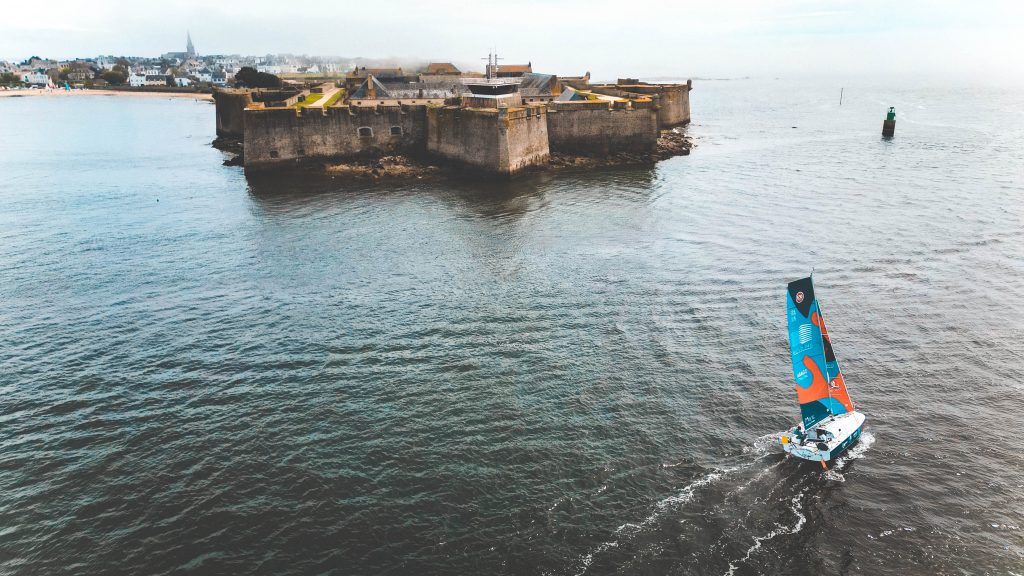
Photo Credit: Maxim Moulin
Required boat equipment for sailing
Life jackets: Every person on board must have an appropriate and approved life jacket. These personal flotation devices are essential for safety in an emergency, especially in case of falling into the sea.
Signaling devices: Boats must be equipped with adequate signaling devices, such as navigation lights, flares, whistles, and signaling mirrors. These devices help attract the attention of other vessels in an emergency or distress situation.
Location devices: A means of location, such as a VHF radio or a waterproof mobile phone, is essential for communicating with authorities in an emergency. Distress beacons, such as EPIRBs (Emergency Position Indicating Radio Beacons), are also recommended to facilitate search and rescue operations.
Fire extinguishers: Boats must be equipped with fire extinguishers suited to the type and size of the vessel. These devices are essential for fighting fires and must be maintained in good working order.
Additional flotation devices: In addition to individual life jackets, it is recommended to have additional flotation devices on board, such as lifebuoys and life rafts, depending on the size and type of boat.
First aid equipment: A complete first aid kit must be available on board, including basic medical supplies and instructions for administering first aid in case of injury or illness.
Nautical charts and navigation equipment: Up-to-date nautical charts, navigation instruments such as compasses and GPS, as well as communication tools, are essential for safe and precise navigation.
Anchoring equipment: Appropriate anchors, anchor lines, and fenders are necessary to secure the boat during stops and at anchorages.
Sailing requires thorough preparation, and possessing the mandatory boat equipment is essential to ensure safe and responsible navigation. In addition to the items listed above, it is recommended to take sea safety courses and stay informed about local navigation regulations.
The checklist of essentials not to forget before heading out to sea, in addition to the mandatory boat equipment
Even though some mandatory boat equipment is essential for sailing, other items are absolutely necessary to take on board with you. To relieve you of any mental burden, SAILIZ has created a checklist of what you absolutely must not forget before you leave.
When you plan to go sailing for several days, it is essential to ensure that you have the mandatory boat equipment on board to meet your needs in terms of safety, comfort, and provisions. Here is a list of essentials to bring on board for a multi-day sea excursion:
Food and drinking water: Plan sufficient provisions for the duration of your trip, taking into account the needs of all crew members. Opt for non-perishable and easy-to-prepare foods. Also, ensure you have an adequate supply of drinking water.
Cooking equipment: Have basic cooking equipment, such as a gas stove or a camping stove, pots, kitchen utensils, plates, and cutlery.
Appropriate clothing: Bring clothing suitable for the expected weather conditions, including warm and waterproof clothing, as well as light clothing for sunny days. Don’t forget spare clothes and sun protection items.
Bedding and toiletries: Make sure you have enough bedding, including sheets, blankets, and pillows. Also bring personal toiletries, such as soap, shampoo, towels, and hygiene products.
Safety equipment: In addition to mandatory safety equipment, such as life jackets and signaling devices, make sure you have a complete first aid kit, flashlights, spare batteries, and basic tools.
Navigation equipment and nautical charts: Make sure you have all necessary navigation equipment on board, such as nautical charts, compasses, GPS, and navigation instruments. Familiarize yourself with your planned route and keep the charts handy.
Anchoring and mooring equipment: Bring anchors of different sizes, anchor lines, fenders, and any other necessary equipment to secure your boat during stops and at anchorages.
Entertainment and communication equipment: Plan for onboard entertainment, such as books, board games, or fishing gear, to pass the time during periods of rest. Also, ensure you have reliable means of communication, such as a VHF radio, a waterproof mobile phone, and location devices in case of emergency.
Fuel and boat maintenance: Check that you have enough fuel for your trip and bring additional fuel cans if necessary. Also, ensure your boat is in good working order and perform necessary maintenance checks before going to sea.
3. Mandatory boat equipment for the sailor and their safety
Self-inflating life jacket or safety harness: A self-inflating life jacket is a personal flotation device that can be worn continuously to ensure buoyancy in case of falling into the sea. A safety harness attached to the life jacket can also be used to prevent the sailor from falling overboard.
Waterproof flashlight: A waterproof flashlight is a useful tool for illuminating the surroundings in low light or an emergency. Make sure it is water-resistant to avoid any malfunction in case of contact with seawater.
EPIRB (Emergency Position Indicating Radio Beacon): An EPIRB is a distress device used to signal an emergency situation at sea. By activating the beacon, it transmits a radio signal allowing search and rescue services to quickly locate the vessel in distress.
PLB (Personal Locator Beacon): A PLB is a portable device worn on the body that can be activated in an emergency to transmit a distress signal with the GPS coordinates of the distressed sailor.
Personal AIS Beacon (Automatic Identification System): A personal AIS beacon is a small portable transmitter that allows other vessels equipped with AIS receivers to locate and track a sailor’s position at sea. This can be particularly useful in a man overboard situation to signal their position to other nearby vessels.
Splash hood or spray hood: A splash hood is an accessory that can be worn to protect the face from spray and saltwater splashes, thus improving the sailor’s visibility and comfort.
Signaling whistle: A signaling whistle is a small portable device that can be used to emit sound signals in an emergency or to attract the attention of other vessels at sea.
By carrying these safety items, combined with the mandatory boat equipment, a sailor can be better prepared to face emergency situations at sea and maximize their chances of survival if needed. It is also important to ensure that this equipment is regularly maintained and in good working order before each sea outing.
An extra tip! The autopilot remote with the man-overboard function for solo sailors
The autopilot remote with the “man overboard” function is a crucial safety device on board a boat equipped with an autopilot. This remote allows the user to control the autopilot functions from a distance, offering greater flexibility and better monitoring of navigation, especially when it’s necessary to stay away from the main helm station. You’ll see why: it’s one of the mandatory boat equipment items for heading out to sea.
The “man overboard” (MOB) function is a special feature integrated into this remote. It is designed to be activated instantly if a person falls overboard. When such an event occurs, the user can trigger the “man overboard” function by pressing a dedicated button on the remote.
Once activated, the “man overboard” function immediately interrupts the boat’s course and activates a search and rescue process. The autopilot typically performs a 180-degree turn to return to the original trajectory and resume course to approach the position where the person fell into the water.
At the same time, the remote can also trigger audible or visual alert signals on board to inform the crew of the incident and the need to launch a rescue operation. Some autopilot remote models with a “man overboard” function even include GPS tracking devices to help pinpoint the exact position of the person who has fallen into the water. This system is essential for solo sailors, but also for those sailing with family, and should be considered one of the mandatory boat equipment items for heading out to sea.

 English