
 English
 Sailing with protection that’s too loose or straps that slip turns every maneuver into a fight against your own gear. Finding the ideal sailing bibs means balancing three-layer technical performance, budget, and ergonomics so the garment finally fades into the background and you can enjoy being at the helm. Find out how to choose breathable, durable armor, co-designed by female sailors to meet the exact challenges of the sea and the female body shape.
Match your protection to your boat and sailing pace
Now that you understand bibs are a sailor’s armor, it’s time to fine-tune them to your playground, because you don’t gear up the same way for a sprint around three buoys as you do for an ocean crossing.
Agility and flexibility for sporty sailboats
On fast platforms like the J/80 or sport catamarans, agility comes first. Maneuvers are constant and quick. A close fit helps you stay agile.
Choose lightweight, two-layer fabrics here. They offer greater freedom of movement to keep you mobile. The garment should disappear. Ease of movement ensures your responsiveness when racing.
Total waterproofing for wet boats and offshore sailing
Exposed boats like Class40s or IMOCAs take constant hits of water. Spray gets everywhere during fast sailing. Fail-safe protection becomes vital. You need to steer under breaking seas without fearing leaks.
Go for high-performance materials. Choose three-layer membranes for long-lasting waterproofing.
Anticipate the needs of night and long passages
At night, moisture settles and the cold sets in on deck for the long haul. Extra thermal protection is essential. Your gear must block the wind to reduce fatigue.
Plan a rotation to stay dry and comfortable. Changing clothes helps maintain essential comfort at sea.
At sea, moisture is the enemy of sleep and performance—hence the crucial importance of gear that stays dry.
Master textile tech to stay dry
But beyond your sailing plan, the real battle against the elements is fought beneath the fabric’s surface—where membrane science replaces the simple cotton of the past.
Understanding waterproofing and breathability ratings
Waterproofing is measured in millimeters Schmerber. The higher the number, the greater the water pressure it can withstand. It’s the first line of defense against squalls and head-on waves.
The RET rating measures how well sweat is released. A low score means the fabric really breathes well.
Avoid the sauna effect. Choose a balance between these two technical values.
Choosing between a two-layer or three-layer construction
A three-layer laminate bonds the membrane between two protective fabrics. It’s the gold standard for durability for regular use. Insulation is better and the garment ages far better. It’s a worthwhile investment for sailors who go out often.
Two-layer models are lighter. They’re perfect for summer outings or tighter budgets.
Optimize protection with the three-layer system
Bibs don’t work alone. Technical base layers regulate body heat. They move moisture toward the outer membrane. It’s the foundation for not shivering.
Pair your bottoms with an offshore jacket. Together, they form a sealed barrier against the sea’s onslaught.
The secret to thermal comfort lies in smart layering, which lets sweat escape while blocking water.
Demand ergonomics designed for women sailors’ bodies
If the technology is universal, the fit isn’t—and it’s time to address specific comfort so your gear is no longer a hindrance but an ally.
Adjust the fit to the specifics of the female body shape
Models designed for women show that sizing matters. The bust and hips require a truly shaped cut.
A fitted silhouette prevents water pockets. Men’s cuts are often too wide or far too long for our builds.
Moving freely is vital. Choose a cut that follows your movements.
Practical solutions for physiological needs at sea
Quick-access opening systems are a game-changer for us. They let you use the toilet without removing all your layers. You save precious time and keep your warmth. Closures must remain easy to handle with gloves.
In rough seas, every second counts. Well-thought-out ergonomics dramatically reduce stress when nature calls.
Reinforcements and adjustments for greater durability
Knees and seat wear out fast on deck. Tough reinforcements extend the lifespan. That’s exactly where the first signs of fatigue appear.
Adjust the ankle settings properly. This blocks water wicking up when you move around on a wet deck.
Adjustable straps ensure ideal support. The garment must stay perfectly in place, even during sudden movements.
Maximize your investment with care and an eco-responsible choice
Once you’ve found the rare gem, the challenge is to make it last while respecting the environment we love to sail through.
Set your budget based on how often you use it
Sailing bibs, heirs to workwear, require a considered investment. Split your budget between occasional and professional use. Models range from €200 to €1,000.
A repairable model costs more. Yet it lasts twice as long as an entry-level one. It’s a winning calculation.
Assess the cost per use. Quality often means future savings. Don’t overlook durability.
Maintain and reactivate the garment’s water repellency
Washing must be gentle to protect the membranes. Use specific products so you don’t clog the pores. Rinsing with fresh water after each outing is vital. It removes salt that eats away at technical fibers.
Reactivate water repellency with an appropriate treatment. Water should bead on the fabric without ever soaking in. A short tumble-dry cycle is often enough.
Choose ethical manufacturing and recyclable materials
Support brands that ban PFCs. These chemicals pollute our oceans for the long term. European sourcing also reduces your gear’s carbon footprint. It’s a political and ecological choice.
Favor recyclable materials like polyester. A circular economy is possible even in technical sailing gear. Sailiz is already committed to this path with 100% recyclable membranes.
“Choosing durable gear that can be repaired locally is a sailor’s first step to protect their playground.”
Finding the ideal sailing bibs means aligning technical performance, body shape, and your sailing program. By choosing an ergonomic cut and a breathable membrane, you turn your gear into an invisible ally against the spray. Gear up now to sail with peace of mind: tomorrow’s comfort is decided by this crucial choice.
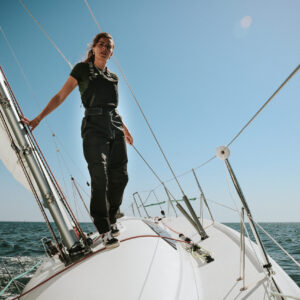

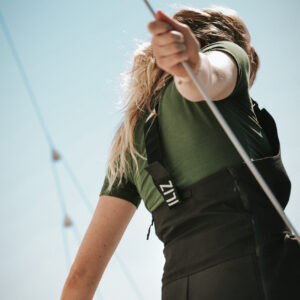
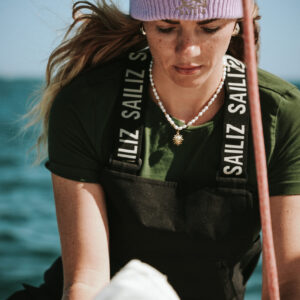
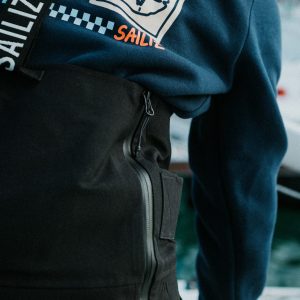

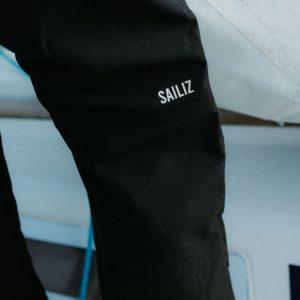
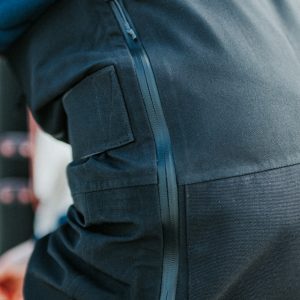

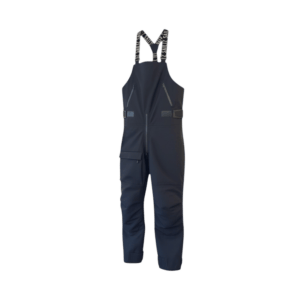
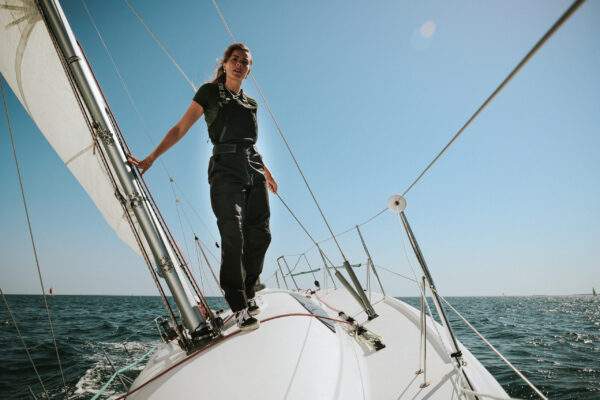
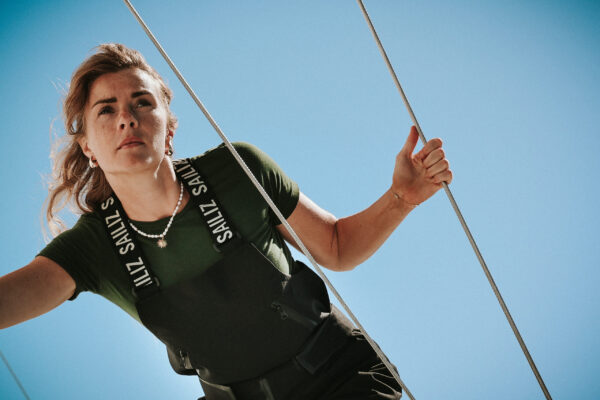
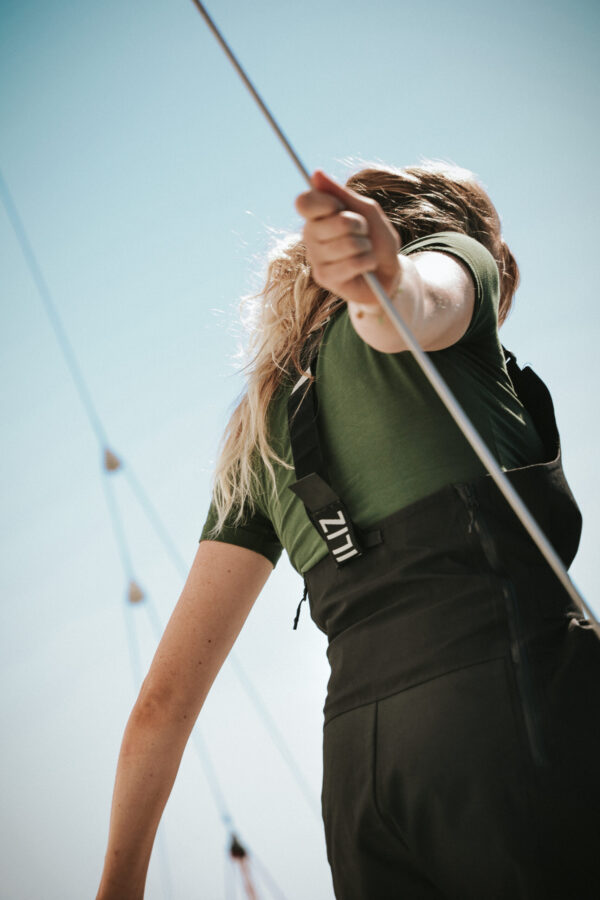
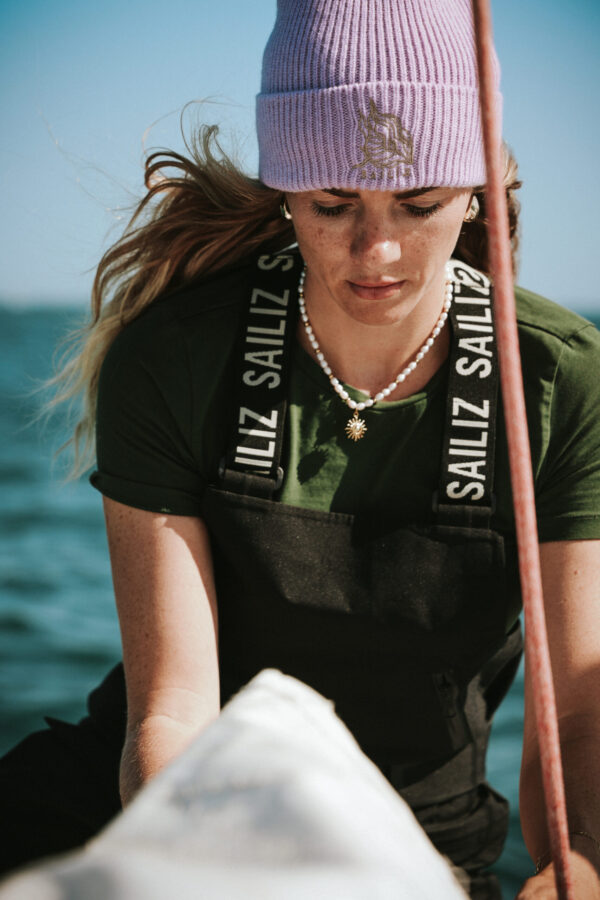
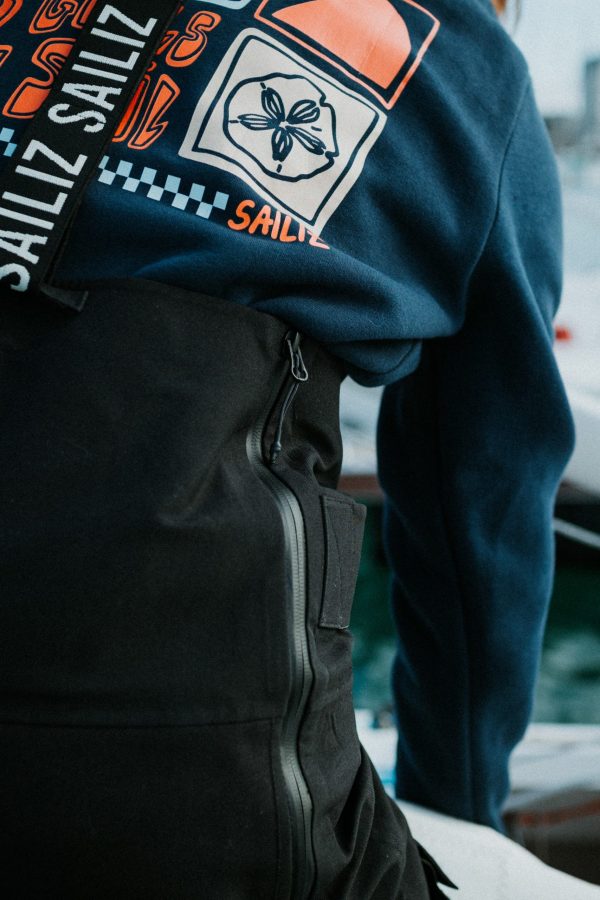
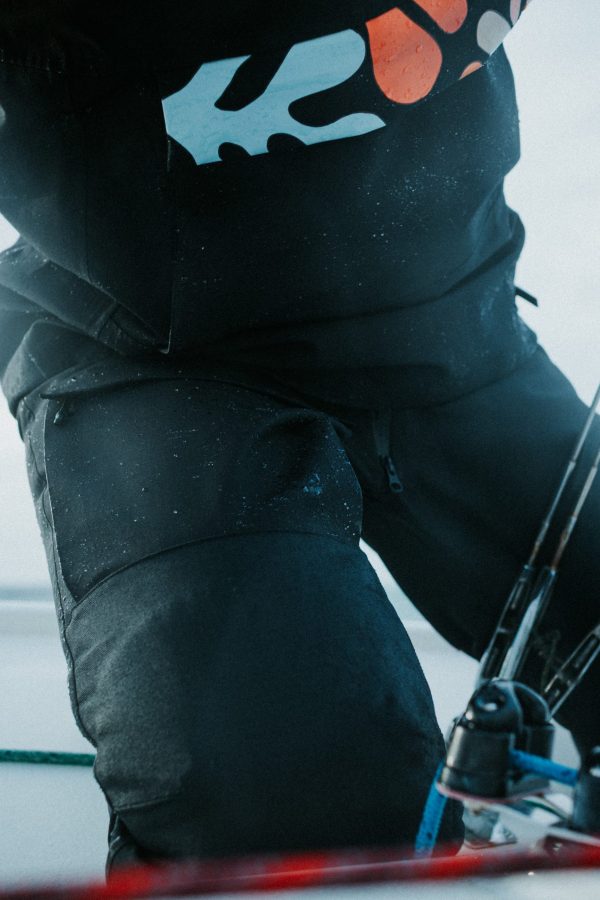
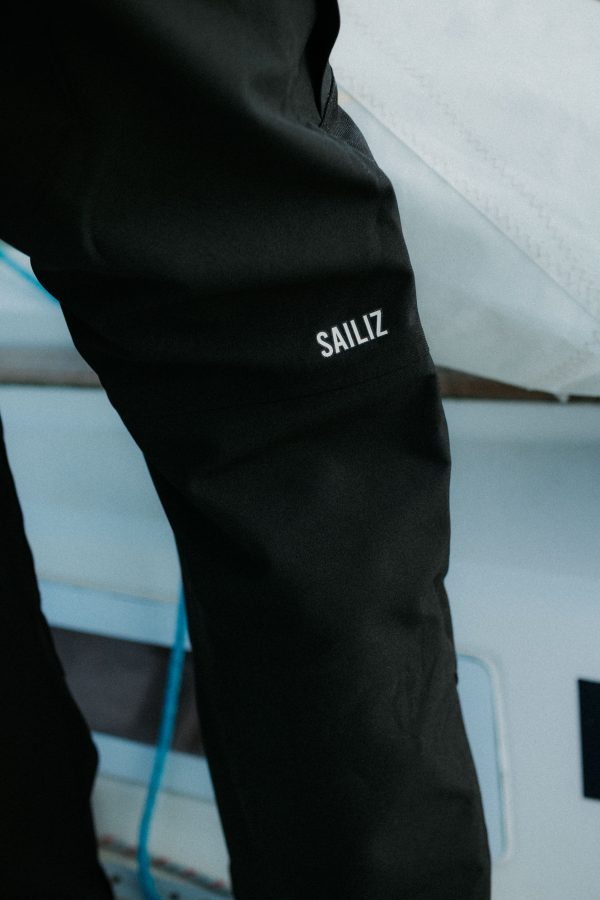
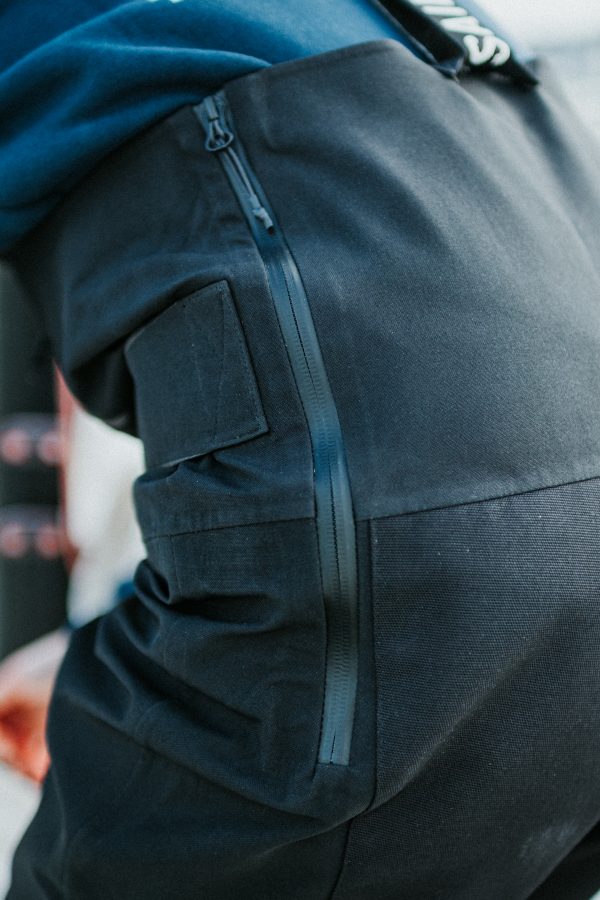
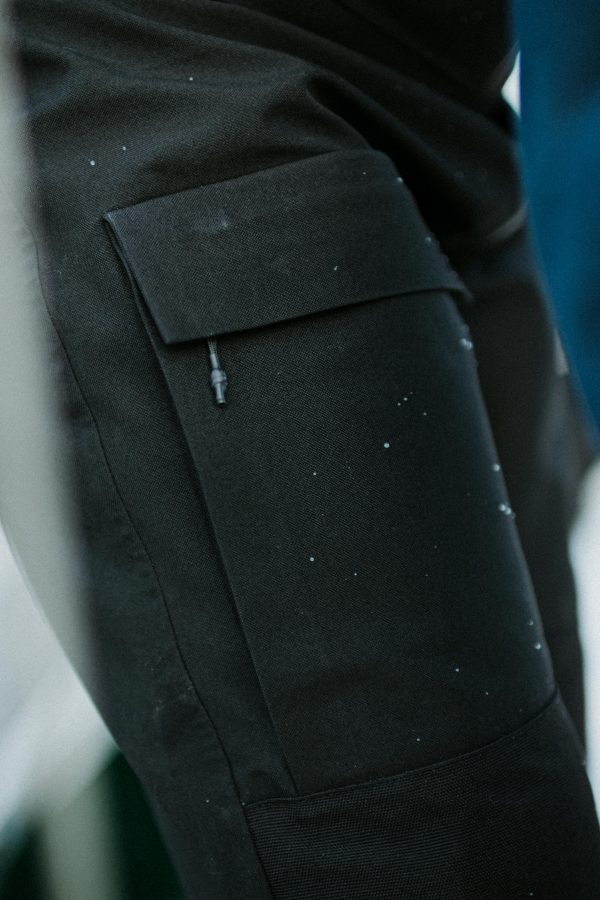
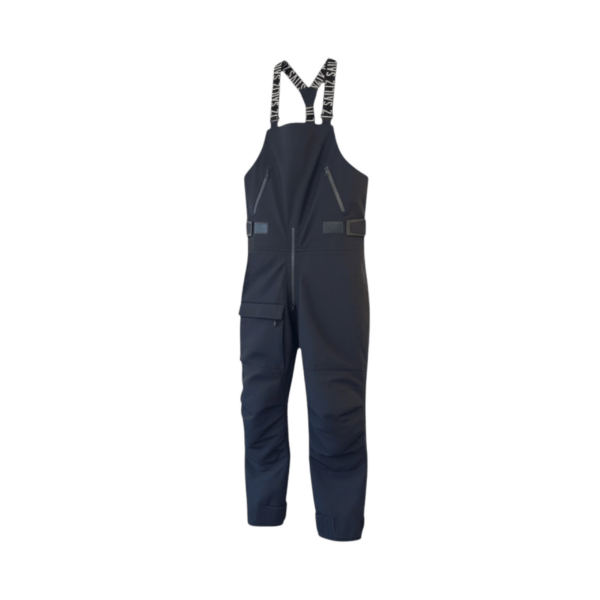
Salopette de quart Femme – Element offshore
Développée à partir des retours terrain de nos navigatrices, la version Element de notre salopette offshore apporte des améliorations concrètes pour plus de confort et de praticité :
- Patchs mousse amovibles aux genoux – Protection renforcée lors des manœuvres à genoux, facilement retirables pour le lavage ou le remplacement
- Bretelles ajustables par scratch – Réglage rapide et précis pour un maintien optimal quelle que soit votre morphologie
- Scratch ultra-performant et non abrasif – Accroche puissante sans agresser les tissus environnants ni la peau
Réparable à vie !