
 English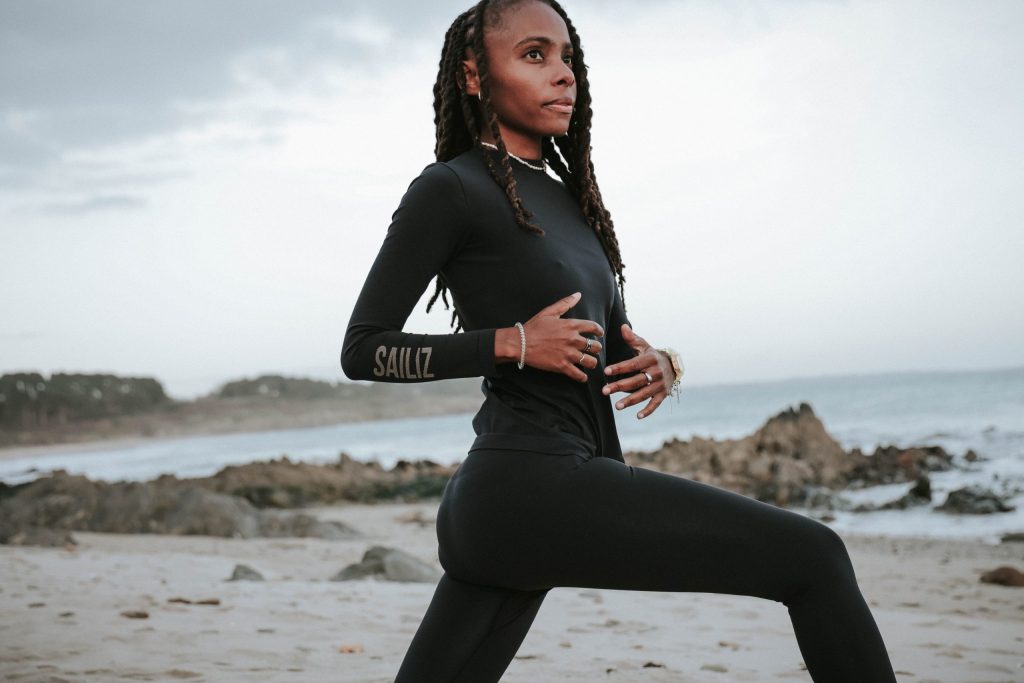
Choosing women’s technical base layers for sailing
Are you sailing in gear designed for a male body that holds back every maneuver? Sailiz base layers change that. Co-designed with female sailors and seamlessly knitted by Henitex, a French manufacturer specializing in seamless, they eliminate friction to become a true protective second skin. Precise thermoregulation, total freedom of movement: every motion feels fluid, even in cool weather.
1. The three-layer system at sea: why the base layer is decisive
At sea, the three-layer rule isn’t optional—it determines your safety and comfort. Voiles et Voiliers regularly reminds readers in its gear guides: neglect the base layer and you compromise the whole system.
The role of the base layer: moisture transfer
A technical base layer works like a moisture pump. It absorbs sweat and immediately pushes it away from the skin. The result: you stay dry even during intense racing or deck work.
Damp skin cools the body as soon as the intensity drops—a reality that’s especially dangerous at anchor or on night watch. Without effective wicking, moisture lingers and blocks your thermal regulation.
Why hydrophobic fibers like polyamide are essential
Polyamide doesn’t hold water. It allows continuous evaporation to the upper layers, even in a humid marine environment. It’s the go-to fiber for technical sailing base layers.
A close fit: your best thermal ally
A well-fitted base layer creates a thin insulating layer of air between the fabric and your skin. It stabilizes your core temperature against changes in wind and spray. A garment that’s too loose lets heat escape—and leaves you exposed to chills.
2. Fabrics and weights: how to read a technical base layer label
Synthetic or merino: which should you choose for sailing?
| Fabric | Drying | Warmth | Odors | Ideal for |
|---|---|---|---|---|
| Synthetic (polyamide) | Fast | Moderate | Treatment required | Active sailing, racing |
| Merino wool | Slower | High | Natural | Offshore sailing, cruising |
| Hybrid blend | Intermediate | High | Partial | All-round versatility |
Synthetic dries about 50% faster than wool—an advantage that really matters when you’re tacking repeatedly. Merino regulates odors naturally thanks to its antibacterial properties: perfect for several days of cruising without a stopover.
Fabric weight: what weight for which season?
- Light (130–160 g/m²): spring and summer sailing, racing in strong winds
- Midweight (200 g/m²): shoulder seasons, coastal sailing in autumn
- Warm (250–280 g/m²): winter sailing, offshore, night watch
3. Female ergonomics and seamless technology: what sets Sailiz base layers apart
Henitex seamless technology: zero friction, maximum comfort
Sailiz base layers are circular-knit at Henitex in their French workshops. This technique removes all side seams—the main sources of irritation under bibs or a harness.
The practical result:
- Zero irritation on the hips and shoulders, where harness straps press
- Better durability: no more threads giving way at stress points
- Comfort under a wetsuit: no seams riding up or bunching
- Clean, streamlined look for a sharp silhouette under sailing gear
That’s exactly what Bateaux.com highlights in its gear comparisons: seamless finishing has become a selection criterion in its own right for demanding sailors.
A sculpted fit for the female body
Women make up 36% of sailors, yet 90% of technical gear is designed on male patterns. At Sailiz, stretch zones are strategically placed to follow female curves: hips, bust, shoulders.
The base layer moves with every action—boom gybe, spinnaker handling, climbing down into the cockpit—without riding up, without squeezing, without you even noticing it.
4. Adapting your base layer to sailing conditions
Coastal sailing and racing (spring / summer)
- Choose a lightweight base layer with high breathability
- Recycled polyamide or a synthetic/merino blend
- Pay attention to ventilation zones under the arms and on the back, where sweating is most intense during effort
Offshore and winter sailing (offshore, long-distance cruising)
- Midweight to warm (200–280 g/m²)
- Merino or a hybrid blend for odor control over several days
- Avoid base layers that are too thick, which reduce freedom of movement under fitted bibs
If you’re unsure: the simple rule
Active sailing and racing → lightweight base layer, quick drying. Cruising and cold conditions → mid-warm to warm base layer, gentle thermoregulation.
5. Caring for technical base layers: preserving high-performance fibers
A poorly cared-for base layer quickly loses its wicking performance. Best practices:
- Wash at 30°C, short cycle
- Turn the garment inside out before washing to protect the fiber
- No fabric softener: it clogs the fabric’s pores and blocks breathability
- Air-dry only—never tumble dry
- Technical detergent suitable for functional textiles
The recycled polyamide used in Sailiz base layers withstands repeated washing and salt water. It’s also a responsible choice: Henitex works exclusively with certified yarns, PFC-free, as part of a sustainable made-in-France production approach.
Conclusion: investing in a technical base layer is investing in your sailing
A quality base layer isn’t a detail—it’s the foundation of your entire clothing system at sea. Sailiz base layers, co-developed with female sailors, made in France at Henitex using seamless technology, meet the needs of the female body in real sailing conditions.
Stay dry. Stay warm. Sail free.